

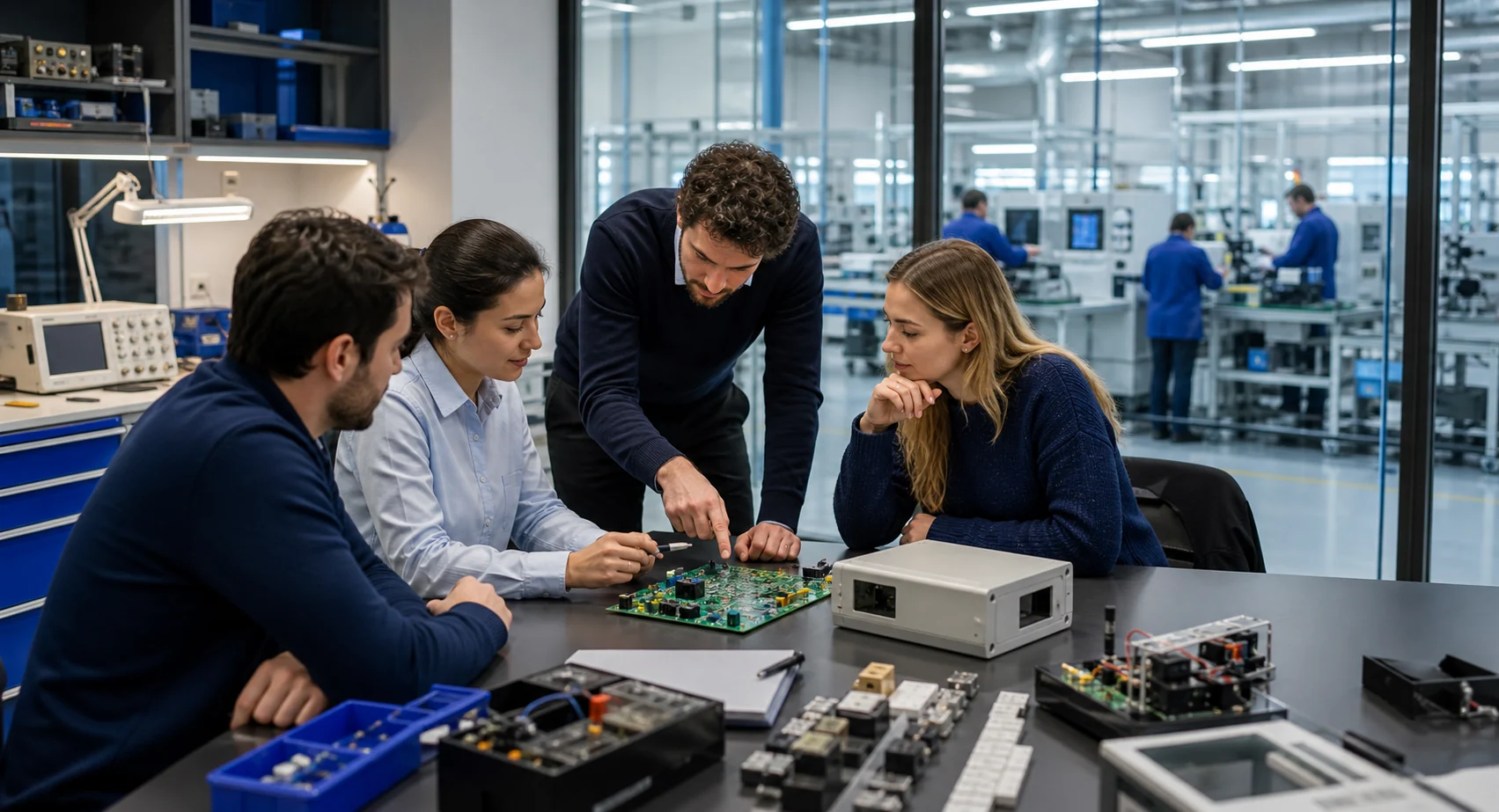
Local design and manufacturing can improve communication, revision speed, support, and lifecycle continuity for electronic products. It should not, however, be assumed to be the cheapest or fastest option in every case. A balanced decision compares total cost, technical risk, volume, quality needs, intellectual property, and long-term product responsibilities.
How should the process be evaluated?
A dependable technical process does more than arrange tasks in sequence. It defines the input, output, owner, and evidence for each stage. When a requirement changes, the team should be able to identify the affected design files, tests, and sourcing decisions. This reduces repeated work and communication loss in both small prototypes and production programs.
The sections below are not a universal recipe. Voltage, environment, volume, safety impact, and certification needs change the appropriate depth of control. A practical method makes risk visible early, turns verification into measurable evidence, and keeps technical files synchronized with every approved change.
Communication and application-specific development
Faster communication
A shared language, close time zones, and direct engineering discussions can clarify requirements quickly. This is valuable during prototyping, when small uncertainties can otherwise disappear inside long communication chains.
A sound decision about faster communication considers tolerances, operating limits, and credible fault conditions—not only nominal values. Recording the input, evidence, and engineering decision in a short note prevents the same uncertainty from returning in later revisions. It also gives manufacturing, test, and service teams a shared technical reference.
A review of faster communication can be concise, but the evidence behind the decision should remain visible. A checklist, measurement record, approved sample, or captured result makes the verification repeatable. When a deviation appears, the team traces the requirement, design, and process chain instead of repairing only the visible symptom, reducing the chance of moving risk elsewhere.
Design tailored to the need
Instead of accepting unused features or missing interfaces in an off-the-shelf product, a board can target the application’s size, power, connectivity, and environment. Customization cost must still be compared with volume.
The depth of control for design tailored to the need should match project risk and production volume. A manual prototype check may need a fixture, automated measurement, or explicit work instruction at scale. The purpose is not to add ceremony; it is to catch meaningful defects in a repeatable way before they reach the customer.
Risks associated with design tailored to the need may not appear on the first sample. They often emerge when temperature, load, vibration, or component tolerance changes. Verification should therefore include realistic operating scenarios, credible worst cases, and diagnostic information that a maintenance team can access rather than relying only on ideal laboratory conditions.
Revision and access to technical support
Easier revisions
When field feedback reaches the design team directly, schematic, PCB, firmware, and mechanical changes can be planned coherently. Speed is useful only when revision records remain controlled.
Easier revisions should not be treated as an isolated discipline. Electrical performance, mechanics, firmware behavior, sourcing, and maintenance may all influence the same decision. An early cross-functional review exposes uncertainty while changes are still inexpensive and keeps the delivery plan grounded in real constraints.
After easier revisions is completed, the team checks consistency between files and the physical product. The approved revision, fitted components, programmed firmware, and test result are linked through traceability records. This simple discipline makes it easier to identify an affected batch during field analysis and avoids unnecessarily broad corrective action.
Access to technical support
Contact with the team that understands the product reduces context loss during diagnosis and application questions. Response times, support levels, and warranty boundaries should be explicit.
When acceptance criteria for access to technical support are defined in advance, the result is more useful than a simple pass or fail. The test condition, expected range, equipment, and response to a deviation are documented. Prototype and production results can then be compared consistently, creating better evidence for root-cause analysis.
The cost discussion around access to technical support should include more than initial engineering time. Detection during production, field downtime, rework, logistics, and support load may dominate the real cost of a defect. Early control can appear to add effort, yet it closes high-impact uncertainty while change is still relatively inexpensive.
Supply risk and intellectual property
Reducing supply risk
Local stock, alternative-part reviews, and shorter logistics can reduce some risks. Electronic components remain global products, so currency exposure and long lead times do not disappear entirely.
A sound decision about reducing supply risk considers tolerances, operating limits, and credible fault conditions—not only nominal values. Recording the input, evidence, and engineering decision in a short note prevents the same uncertainty from returning in later revisions. It also gives manufacturing, test, and service teams a shared technical reference.
A review of reducing supply risk can be concise, but the evidence behind the decision should remain visible. A checklist, measurement record, approved sample, or captured result makes the verification repeatable. When a deviation appears, the team traces the requirement, design, and process chain instead of repairing only the visible symptom, reducing the chance of moving risk elsewhere.
Protecting intellectual property
Source access, confidentiality, manufacturing rights, and third-party sharing can be managed more visibly. Real protection depends on contracts and access control, not geography alone.
The depth of control for protecting intellectual property should match project risk and production volume. A manual prototype check may need a fixture, automated measurement, or explicit work instruction at scale. The purpose is not to add ceremony; it is to catch meaningful defects in a repeatable way before they reach the customer.
Risks associated with protecting intellectual property may not appear on the first sample. They often emerge when temperature, load, vibration, or component tolerance changes. Verification should therefore include realistic operating scenarios, credible worst cases, and diagnostic information that a maintenance team can access rather than relying only on ideal laboratory conditions.
Delivery and product lifecycle
Potentially shorter delivery cycles
Prototype logistics, sample review, and revision loops may become faster through close collaboration. Actual lead time still depends on components, capacity, test scope, and project changes.
Potentially shorter delivery cycles should not be treated as an isolated discipline. Electrical performance, mechanics, firmware behavior, sourcing, and maintenance may all influence the same decision. An early cross-functional review exposes uncertainty while changes are still inexpensive and keeps the delivery plan grounded in real constraints.
After potentially shorter delivery cycles is completed, the team checks consistency between files and the physical product. The approved revision, fitted components, programmed firmware, and test result are linked through traceability records. This simple discipline makes it easier to identify an affected batch during field analysis and avoids unnecessarily broad corrective action.
Product lifecycle management
Access to design history helps when parts become obsolete, firmware needs updates, regulations change, or field feedback arrives. Disciplined archives and revision planning make this advantage durable.
When acceptance criteria for product lifecycle management are defined in advance, the result is more useful than a simple pass or fail. The test condition, expected range, equipment, and response to a deviation are documented. Prototype and production results can then be compared consistently, creating better evidence for root-cause analysis.
The cost discussion around product lifecycle management should include more than initial engineering time. Detection during production, field downtime, rework, logistics, and support load may dominate the real cost of a defect. Early control can appear to add effort, yet it closes high-impact uncertainty while change is still relatively inexpensive.
Maintenance, spares, and long-term cost
Maintenance and spare-parts benefits
Known functions and tests allow practical planning for spare boards, critical components, and service procedures. Local access may reduce downtime, while stock levels should follow real failure risk.
A sound decision about maintenance and spare-parts benefits considers tolerances, operating limits, and credible fault conditions—not only nominal values. Recording the input, evidence, and engineering decision in a short note prevents the same uncertainty from returning in later revisions. It also gives manufacturing, test, and service teams a shared technical reference.
A review of maintenance and spare-parts benefits can be concise, but the evidence behind the decision should remain visible. A checklist, measurement record, approved sample, or captured result makes the verification repeatable. When a deviation appears, the team traces the requirement, design, and process chain instead of repairing only the visible symptom, reducing the chance of moving risk elsewhere.
Long-term cost evaluation
Compare unit price with engineering, tooling, testing, logistics, minimum order, quality escapes, inventory, and maintenance. Local supply may be advantageous, but the conclusion must come from project data.
The depth of control for long-term cost evaluation should match project risk and production volume. A manual prototype check may need a fixture, automated measurement, or explicit work instruction at scale. The purpose is not to add ceremony; it is to catch meaningful defects in a repeatable way before they reach the customer.
Risks associated with long-term cost evaluation may not appear on the first sample. They often emerge when temperature, load, vibration, or component tolerance changes. Verification should therefore include realistic operating scenarios, credible worst cases, and diagnostic information that a maintenance team can access rather than relying only on ideal laboratory conditions.
Conclusion and next step
Under the right project conditions, local design and manufacturing can provide agility and technical continuity. RoseVia can compare custom design, prototype, sourcing, and production options against target volume and risk without assuming a universal cost advantage.
Reviewing the technical scope, production objective, and available project files together is the most reliable way to choose the next step.